
Adventures in Victorian Science Fiction & Steampunk with ramblings about Aeronefs, Dirigibles, Land Ironclads, Anarchists, Dinosaur Hunting, Terranefs, Aquanefs, Mad Scientists, electric contraptions and steam conveyances. It may not make sense, but there will be claret and a nice cheese board at the end. Tally-Ho and "Vôtre dans une sauce au vin blanc!"
Tuesday, 11 November 2008
Build your own Ray-gun

Monday, 10 November 2008
Sunday, 9 November 2008
Saturday, 8 November 2008
Lovely terrain
Friday, 7 November 2008
Wednesday, 5 November 2008
DinoMight Review

Page 1 of the rulebook provides an introduction to the game and some background notes which provide a useful overview of the thinking behind the system. I was particularly interested to read that the author, Richard Clewer, is intending to produce an expanded set of rules to include flying and swimming creatures etc at some point in the future.
Page 2 covers the object of the game, which is primarily survival, together with details of what is needed to play. This includes a ten sided dice per player, figures, terrain in the form of hills, swamps, jungle and ‘impassable ground' such as cliff edges, a tape measure and playcards for each dinosaur or hunting party. The suggested playing area is a kitchen table sized space i.e. about 4' x 4' and there are some suggestions for simple terrain representation. Given the small scale of the figures I'm sure some very impressive purpose built terrain features could be constructed with very little effort which is one of the advantages that the rules offer over conventional 28mm games.
Page 3 suggests starting forces and describes the concept of a unit in the rules. A unit is basically a 20mm x 40mm base on which an individual dinosaur is mounted. Human hunting parties and smaller pack dinosaurs are also mounted on a 20mm x 40mm base but are represented by multiple figures. This seems a very simple but effective basing system, although larger models will need larger bases. Page 3 also describes the information required for each model, with 6 ratings that need to be recorded on the corresponding playsheet i.e. Panic (used as a reaction test at the start of a turn), Sense (used to detect other dinosaurs in ambush as an opposed roll versus concealment), Concealment (the ability of your dinosaur to hide in ambush), Attack (divided into Close and Ranged attacks), Defence (armour protection) and finally Move (how far or fast it can travel). There is also a Size Rating for each dinosaur which can affect its concealment. Finally, the procedure for initial set up is covered, although these can vary with the scenario being played, including length of each game, objectives etc.
Page 4 deals with the turn sequence, consisting of an IGOUGO format based on a D10 initiative roll at the start of the turn. This is clearly set out in steps from 1 to 15 which sounds long winded but I suspect would be picked up very quickly after a game or two. The turn sequence is logical and consists of a Panic Test, Movement and Combat as a result of Panic, then Perception / Spotting, Movement and Combat. This is repeated by each player until all players have finished their turns. Simple and straightforward!
Page 5 sets out the procedure for Panic Tests which determine whether or not dinosaurs recover from panic as a result of previous combat or charging. This is a simple D10 test with modifiers. The rules clearly explain the outcome of failed or passed tests and include an example in the form of a very clear .labeled diagram.
Page 6 goes on to describe a similar procedure for perception i.e. spotting, for units either intending to attack or trying to detect attackers. This is, therefore, an opposed Sense v. Concealment roll with modifiers due to range, cover etc. Again, a simple but effective system, that is clearly illustrated and explained in an accompanying diagram on p7.
The rest of Page 7 covers movement, which is by straight line with any change of facing at the end of each turn. Measurement is in inches with halved movement when crossing difficult terrain. This could result in some confusion but luckily, another illustrated diagram makes things very clear. There are also rules and diagrams on page 8 to cater for defensive combat by armoured dinosaurs such as Triceratops and different rules for offensive attacks by predators such as T Rex on Page 9.
These combat related movement rules are extended on Page 10 with a system for executing ambush attacks which are clearly and neatly explained in the accompanying diagram. This is one area in which rules sometimes fail to work well but the system described seems to have ironed out the problems associated with surprise attacks very well. The way in which the rules for ambush dovetail with spotting procedures and initiative order should make it easy to determine what the results of an ambush attack would be without too much confusion.
Finally, Page 10 to 13 cover the all important procedures for close and ranged combat. This is a simple system based on Attack Value versus Defence Value modified by a D10 roll and a range or factors such as direction of attack, size of target etc. A successful attack inflicts damage according to the ratio of attack to defence totals with both minor and major critical hits inflicted as a result. The table of critical hits includes negative modifiers to key attributes such as sense, movement or panic. A Dead or Mortal Wound result has the inevitable consequences. The rules for ranged combat work in a similar fashion but are designed to cater for attacks by dinosaur hunters at short, medium and long range.
To round off the rules booklet there are a series of three scenario outlines on Page 14. These provide some variations on the basic theme of competitive dinosaur combat described in the first of these scenarios, The Hunt, which consists of a point based head to head game for multiplayer use. The second scenario, Dinner Time, pits herbivores against carnivores in a test of survival from one edge of the table to the other. The final scenario, Protect the Nest, is based upon just that, with the various combatants trying to protect their eggs whilst destroying those of the opposition. Although simple in outline, all three scenarios offer scope for variety and provide a model for development of other ideas.At the back of the rule book there is a table of dinosaur statistics (Appendix A) for most of the models in the Magister Militum Jurassic and Cretaceous ranges. There are also statistics for dinosaur hunters including tribesmen, rifle armed Victorians and Pulp or Modern era machine gun armed units. It would be very simple to devise additional statistics for other prehistoric creatures based on the data provided, although I suspect that Richard will update and expand the information as new models are released including, for example, the ‘Post Dinosaur' mammals and birds already listed in the ‘Dinomight' range (a list of available figures is included in the rulebook).
Overall, this seems like a well written and carefully designed set of rules which provide an excellent introduction to prehistoric gaming for beginners and a refreshing change from conventional 28mm dinosaur hunting, although there is no reason why they couldn't be adapted for use with such larger scale figures. They are also very good value for money and are supported by an expanding range of high quality 10mm miniatures. It would be great to see the rules developed further to include the both sea and flying creatures and, in particular, to develop the human element of the game. I'm sure such a move would be very popular and would help to encourage many more gamers to try out the Dinomight system for themselves.
The Dinomight rules and figure range can be obtained from Magister Militum via the web at magistermilitum.com and are also available direct from the Magister Militum stand at many of the UK and European shows.
In a later post, Jim goes onto say:
The base size plays no real role in the mechanics of the game aside from clearly defining the front, side and rear of the unit. So, yes, you could easily scale up to 28mm, and could probably dispense with bases altogether, although that might be a recipe for confusion at times e.g. when determining movement across terrain.
The rules are designed for multiplayer games but would work well as a two player or even solo system. The emphasis is clearly on a 'beer and pretzels' experience, not unlike Saurian Safari or Tusk for that matter. It's definately in the same 'genre' as these established dinosaur hunting games, so if you're familiar with them you'll like Dinomight.
The aim of the rules depends upon the scenario, as described in the rules, but it, in essence, it's to kill the opponent if playing as a Carnivore or defeat the predator if a herbivore. Obviously, human hunters are rated as predator in this respect.
Thanks for the reveiw Jim. You can find the TMP thread here:
http://theminiaturespage.com/boards/msg.mv?id=153767
Tuesday, 4 November 2008
Spar Torpedo Rules
The Spar Torpedo is a fairly suicidal aerial weapon currently used only by those most desperate of adversaries, Sky Pirates. A craft designated as a Spar Torpedo vessel must manoeuvre so that it is within 2" of an enemy vessel, and the enemy vessel is in its front arc. It may then detonate the torpedo, causing 1d6 damage to the target (re-rolls apply on a '6'). If the die roll is '1' then the weapon is considered to have back-fired - the target still takes 1 damage point, but the carrying vessel takes 1d6 damage itself. The spar torpedo is a one shot weapon.
Thanks gents!
http://www.brigademodels.co.uk/Frames/Gaming/Aeronef/Rules.html
Sunday, 26 October 2008
The Baron's Blog
http://baronvonj.blogspot.com/2008/10/mk-ii-mobile-mg-emplacement.html
Tuesday, 21 October 2008
Thursday, 16 October 2008
Farewell for now!

Wednesday, 15 October 2008
International Journal of Naval History

The War that Time Forgot
WW1...the Imperial German army faces off against the Allied Armies.
This is a new war, a war of mechanisation, new innovation and....dinosaurs!

"Set during the early days of World War 1, the technology of warfare takes a suprising turn asbattlefields quake not with the sound of tanks but shudder to the roars of DINOSAURS!"
Thanks to Jim of LostWorldsSafari for the linkTuesday, 14 October 2008
Terror Birds
Terror Birds: Predators With a Kung Fu Kick?
http://news.nationalgeographic.com/news/2005/08/0801_050801_terrorbirds.html
and they may have been bigger than we thought too:
Huge bird-like dinosaur unearthed
http://news.bbc.co.uk/1/hi/sci/tech/6750005.stm
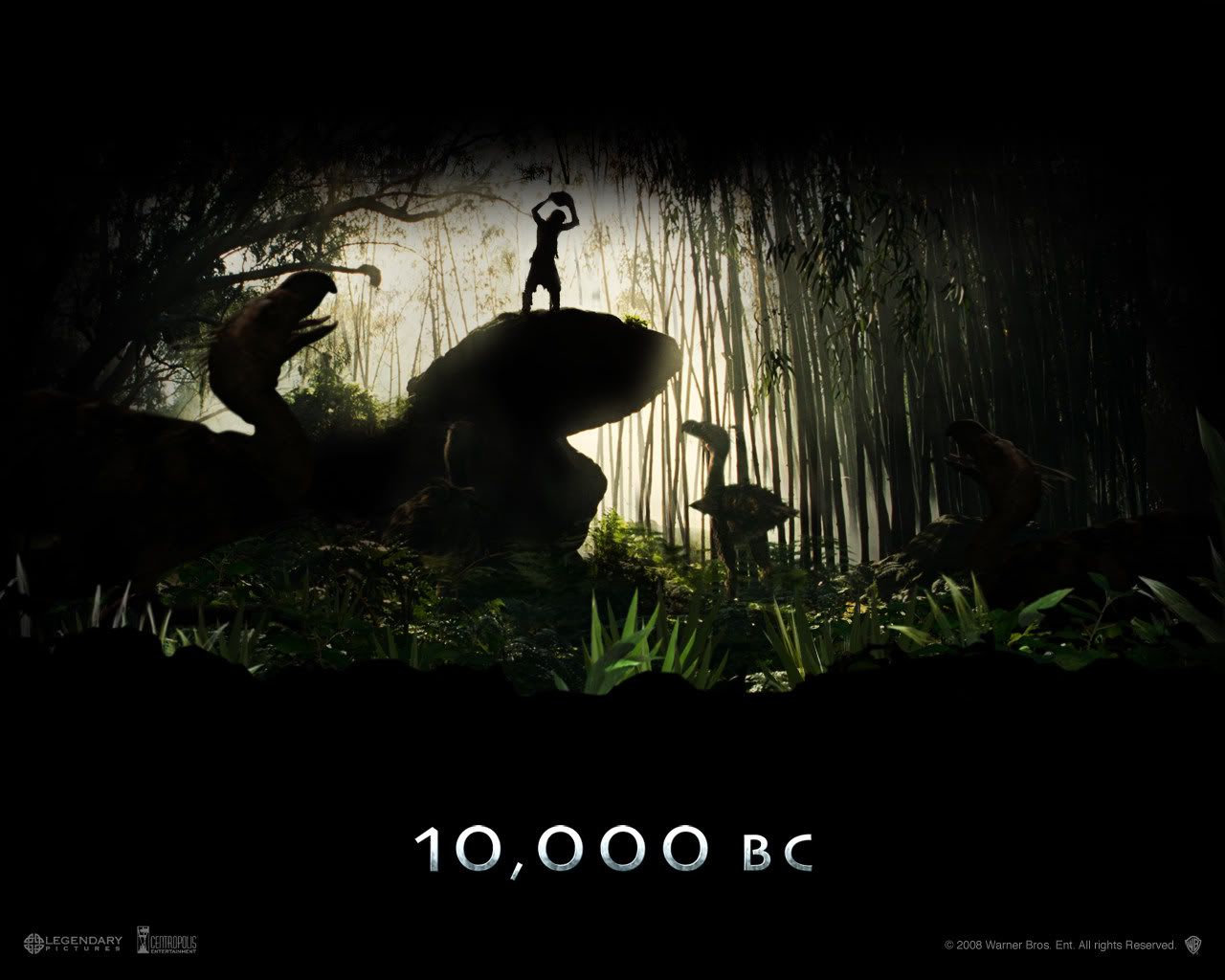
All of which leaves this poor neanderthal in a heap of trouble...
Pic courtesy of the film 10,000 BC
Bill's French Fleet
This week, he shows off his new Frenchies, along with close-up pics of both fleets!
I think they are lovely, nicely detailed and crisply finished
http://billwerks.blogspot.com/2008/10/and-zhe-french.html

DinoMight rules
An exploration of debauchery, vice and other reasons to be a man!


